Showing posts with label What Are You Reading?. Show all posts

Thursday, November 13, 2014

Investor's Book Club

Recently, I started an accountability arrangement with a fellow real estate investor. We wrote our goals for different aspect of our life and business, and everyday we send each other our "To Do" list for the day. 

After getting home at 7 am between two events, I jumped in my bed and into the warm blankets and I was planning on watching a show on Netflix. Before I did, I checked my email and received my accountability partner's "To Do" list. Instead of staying in bed, I got up and made my own "To Do" list for the day. I would have spent the whole morning in bed but instead I ended up working on my business and got tons of stuff accomplished. 

Thanks Partner!!


One of the goal I made for myself was Education. I decided I would dedicate a portion of my day every day towards my education. I have taken many classes in real estate investing, stock investing, sales and negotiation, business planning, and presenting. It is important to always be learning. So now that I have taken so many classes, I am still dedicating time to my education but more in the form of books. There are amazing books out there that share great information.


The problem is, as was demonstrated in the study of the Cone of Learning, we only retain 10% of what we read. I love reading, and I love learning, but 10% is not great results. So if I want to increase the value of the time I spend reading I need to make reading into a more active form of learning. My solution was to create a book club dedicated for investors. Participating into a discussion increases the level of retention to 70%. 

If you find yourself in the same situation as me, and you would like to increase the value of the books you read and the time you dedicate to it; join my Facebook group Investor's Book Club.


I have an extensive investor's library but many of my books are still unread or I don't remember many of the key points in the ones I have read. I am looking forward to starting the first book with the book club and to debate and discuss what I learn.

Sunday, September 14, 2014

Q&A Network Event

My oh my what fun we had last night!!!

I love attending and hosting network event. Real estate talks are a plenty and the topic is so fascinating. Believe it or not, most people around me don't want to talk real estate and investment. I know, shocking right!

Well last night I was surrounded be willing chatters. More then that, we arrange for a Q&A during the event. Everyone who attended were given the chance to write down real estate investing questions and we answered and discussed each one. What an amazing learning opportunity that was. Also each questions entered them for a door prize. Congrats to Sarah who was our winner last night.


That's right, we wrote our questions on "$1000 dollar bills".

Here are some of the questions we discussed last night.

Q:  Is Kijiji really a good tool for real estate investor? How would you use it?

A:  Yes! Kijiji is a great tool, if you are a real estate investor you should use it. The most important aspect of a real estate investor's business in the connection we make with others. Real estate is a team sport. You will need renters, sellers, and buyers. Kijiji is a great way of finding them. Place an add, "Handyman Special" to look for flip buyers. "Stop Renting" to locate tenant-buyers.


Q:  Should I renew my existing Kijiji add or create a new one?

A: Create a new one. Let there be a few adds for a few different offers. In fact you should have an ongoing presence on Kijiji. I try to place adds weekly. Let them scroll through and find a few from you. It will make you look like an active investor, not a tire kicker.


Q:  Which are the best group of people to sell your properties to? Investors or non-investors?

A: Well if you have a multi-unit you will need to approach investors. These will not appeal to first time home-buyers. But if you are working on wholesale or rehabs, basically for a single family house. You can easily sell these to either an investor or a non-investor. However, educated investors knows that having a property under contract is still not a completed deal. Due diligence will indicate if it will be a go or not for example. However, when a homeowner puts pen to paper for a purchase contract; that is a done deal in their mind and will most likely close on the property.


Q:  What exit strategy do you use?

A:  Your first level of exit is the exit clause in your purchase contract. These are a must. Never EVER sign a purchase contract without exit clauses. EVER!!
Wholesale is the universal exit strategy. No matter with property or which strategy you are concentrating on, always be ready to wholesale. When in doubt, wholesale it out!
For a rent-to-own, if the tenant-buyer can not close at the end of the term, there are a few exit option. Extend the term if they are still a good candidate. If they leave the deal, then you can find a new tenant-buyer, sell, wholesale, or rent.
For a flip (rehab) you could always turn it into a rent-to-own, wholesale, or offer a VTB (Vendor Take Back) in hopes to attract more buyers.


Q:  What is your favourite tool that you have used for real estate investing?

A:  With this questions we took turns describing out favourite tools so here are a few ones that was discussed. DocuSign. I have talked about that app in a previous post. In fact you can view it here. DocuSign give you the ability to sign PDF files directly on your phone or tablet and email the signed copy. So when I am on the road, if I have a realtor send me a purchase contract I can sign and send it back from my phone and not delaying giving the chance for other investors to put in offers in before me.
Team Viewer. This program give you the ability to access the desktop on your computer at home from anywhere. This gives you easy access to all your files and programs no matter where you may be. "Let me call you back when I get back to my office" will no longer be a viable excuse. OneDrive is a similar program available. Of course there are so hacking concerns, be aware.
You can do business from anywhere. You can fill your day with which ever activity you which and maintain your business as needs arise from wherever.


Q:  What should I know about purchasing a house for a bank for a wholesale deal?

A:  Don't. The wholesale strategy is purchasing a property with equity. By law, in Canada, a foreclosed property must be listed and sold by a realtor at or as close to fair market value as possible. So basically that means there will be no equity in this deal. Not only that, foreclosure have a reputation to be a great deal (even if they are not). Therefore many buyers look for foreclosed property and then they offer top dollars to secure the properties causing for these properties to sell for sometime more then fair market price. So to recap, you could find a good deal in a foreclosure, but the fact that it is a foreclosure does not guarantee for it to be a deal.


Q:  How do you get a money partner to pull the trigger on a deal?

A:  This question triggered a great group discussion and a few key points where brought up. It is harder to deal with new investors. If this is going to be their first "deal" that they will be involved with, they will be more nervous and they will be easily get cold feet. The best strategy to use here, in my opinion, is to keep the process of investing with you simple. Keep them out of the minutia as much as possible. Also do not drag on the process. Here is an example: "To invest with me, it is a simple three step process. One - qualify you with a mortgage broker. Two - information review (in a nicely compiled rapport, all at one time not bombarding them with tiny details every few days.) Three - Sign contract. Get a signed commitment of some sort before removing condition on the deal. Ideally get the money prior to that (in trust with the real estate lawyer). But having them put pen to paper, even if it's just on a letter of intent requires a level of commitment. If they hesitate at that stage, they will not likely close.
Our door prize was also the ideal answer for this issue. Pitch Anything is about how to present and close on deals. I have posted on the topic of that book in the past. You can view it here.


There will be more network events and there will be more Q&A. If you would like to submit questions even if you can not attend, email your questions to me here and get in the learning. Every questions submitted will be entered in a draw for a digital gift.


Wednesday, October 30, 2013

What Are You Reading? Why "A" Students Works For "C" Students - Part 1, Chapter 5

The "Action Step For Parents" in this chapter is to discuss your child's dreams and the different ways success is defined outside of the school system.


When I'm working an event, we always ask out student what are their "Why" or their "Dream". Most of the time, they do not have an answer ready. If we were to go into a kindergarten classroom instead and ask the same question, we would be bombarded with answers. When did we loose our capability to have dreams and goal for ourselves? 

It's important to nurture those dreams and goal in our children. Not only that, but we should also develop them by activity planning on them. Discuss how to make it a reality the different and best way to learn.


Wednesday, September 11, 2013

What Are You Reading? Why "A" Students Work For "C" Students - Part 1, Chapter 4

The "Action Step For Parents" in this chapter is to introduce new ideas, words, concepts, and experience to your child on a regular basis and, ideally, in the course of everyday life.


Any situation and any occasion is a great time to introduce new ideas and discussion about money with your child. Keep it appropriate based on their age. Last week my husband was playing Monopoly with the boys. They got discussing the mortgaging option on Monopoly. The benefit: money in your pocket now; and the disadvantages: the reduced cashflow if someone lands on their property.

Robert talks about the different windows of learning:

  • Windows of Learning #1: Birth to age 12 - Quantum Learning:                                                                This window of learning is when the brain is whole and neural pathways are being connected. After age 12, in order to learn something new, a new neural pathway needs to be built from scratch. It really is harder to teach an old dog new tricks; this is why it is important to learn new words and concept in this first window so that the pathway is in place to expand on those concept in the next window of learning.
  • Window of Learning #2: Age 12 to 24 - Rebellious Learning:                                                                   This is a stage at which to encourage exploration. So encourage your child to find the answers to the question that arise. Provide the tools to investigate the consequence of actions and be open to discussing the process with them. In this rebellious stage, telling a child not to do something is likely to trigger the opposite response. Rather than say "Don't..." do something, ask: "What do you think the consequences might be if you did that?" Encourage your child to make their own decisions, if they fail or falter do not rush in to rescue them. We learn from experiencing the real-life consequences of our actions and decisions and working through them.
  • Window of Learning #3: Age 24 to 36 - Professional Learning:                                                                 Your relationship with your adult child at this point as evolved. If you have spent time on their financial education in the earlier stages of their life, this is when you will see them put that foundation knowledge into practice. This is the stage where you watch your child select their own path of life.

Wednesday, September 04, 2013

What Are You Reading? Why "A" Students Works For "C" Students - Part 1, Chapter 3


Chapter's three action steps for parents is: Use Money Problem As Opportunity To Learn.

Most parents try to shelter their children from the money problem they are facing. Growing up I never knew why we where having money issues, I just knew we didn't have any. The only thing I learned about money was not to ask for it. I remember turning down school trips when there was a fee involved. My parents never knew there was an event coming up. So really, I wasn't truly sheltered, I just didn't understand the concern. I handled it by avoiding the topic best I could.


Your child may be too young to handle serious money issues, in such a case, Robert suggest that you instead discuss budgeting for grocery shopping and take them along. 

We all have money problems, no matter how wealthy we are or how wealthy we are not. See your money issue as an opportunity to grow your child's financial IQ.

Wednesday, August 14, 2013

What Are You Reading? Why "A" Students Work For "C" Students - Part One, Chapter Two

Chapter's two action step for parents was: Take time to discuss money and the role it plays in life.


When I was growing up, money wasn't abundant in our household. It was a big source of stress to my parents and as a result, talking about money was taboo. If money was part of a conversation, that conversation was more an argument. I learned very little about money in that stage of my life.


In this chapter's action step, Robert suggest money issues should be discussed as a family. Discuss real life money problems when they occur in the course of the everyday life. Talk about the problems and challenges, what causes them and how to resolve them. Make your home a place to discuss money not argue about it.


Wednesday, August 07, 2013

What Are You Reading? Why "A" Student Work For "C" Students - Part One, Chapter One

I've mentioned in a past post that I wanted to refer my future "What Are You Reading?" posts to the book Why "A" Students Work for "C" Students; but I also don't want to take away from the information you would learn from reading the book so I will post about the "Action Steps For Parents" that is found at the end of each chapter. To fully get the most of this book, I highly recommend you purchase and read it.


Chapter one's action step for parent was turn your house into a place of active learning. Robert suggest you create a WEN, a "Wealth Education Night". Set one night a week or one night a month to be a night to actively learn about money. Make it a family ritual and make it fun.

Our children are slowly learning about money, whether we are involved or not. In fact, this morning my youngest snuggled with me for a little while. He was playing with the calculator on my phone. He showed me a large number he had entered on the calculator and said: "I'm going to save up this much money in my life."

Most parents would probably smile and be glad that their child is already thinking about saving money but I've educated myself into thinking differently. I got a sense of dread hearing those word coming from him. It is my belief that saving will not provide anyone with financial freedom, it won't even support retirement; even more so if you take inflation into account. So since saving for you future is not something we preach in my household how is it that this is what my child, at the age of six, sees this as his financial goal? It may be school, television, grandparents or neighbours. My point is there is information out there, if we do not take an active part of our children's financial education they will end up being slave to the system. Thinking their J.O.B. will provide them with security.

When he was a child, Robert's "Rich Dad" would play Monopoly with him to teach him about money. He suggest you do the same with your child, may it be Monopoly or Cashflow for kids, 101 or 202. Obviously, I need to take a more active approach to educating my kids about money.


Wednesday, July 31, 2013

What Are You Reading: 8 Rich Dad Scams "8 Financial Scams Disguised As Wisdom"

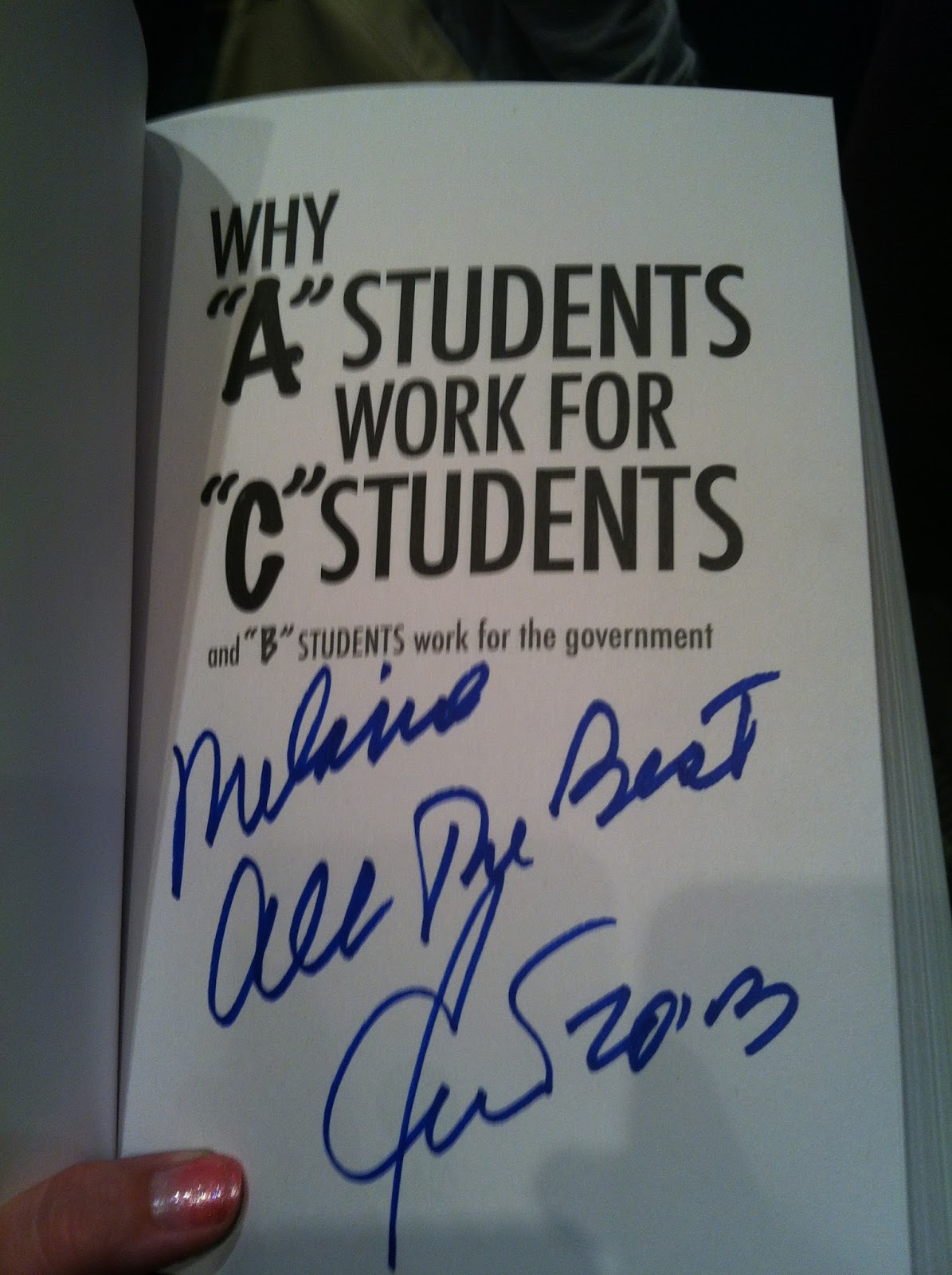
I was going to be doing the next few "What Are You Reading" posts about the book "Why "A" Students Works For "C" Students" but I left my signed copy on the plane when returning from Toronto. I have an other copy, although not autographed, that is currently lent out. I'm a little upset with myself for having left it behind, but I might just have changed someone's life forever, for the person who finds and reads it.

So until I get my other copy back, I decided to post about 8 Rich Dad Scams.


This is a short read and a free download on the Rich Dad website. It discusses the 8 financial scams that are disguises as wisdom.


  1. Higher Education: Basic education taught from grade K to 12 is very important for everything that will follow in life. However, a college/university education teaches you to become an employee. If you want to be rich, don't count on school.
  2. Get A Job: A job makes you work hard to make someone else rich and you will be paying the highest level of taxes. If you create jobs, and work for yourself you will get to benefit from the many tax breaks available.
  3. Work Hard: Working harder to make more money will result in you paying more taxes. Most people work hard all week looking forward to Friday, only to be depressed again on Sunday at the thought of having to go back to work.
  4. Live Below Your Means: Instead of living below your means and saying to yourself "I can't afford that", ask yourself "How can I afford that?" learn to be creative to make more money to live the life you want.
  5. Save Money: Since the currency was taken off the gold standard it no longer holds its value. Putting your money in the bank where it will lose it's value will not get you ahead.
  6. Your House Is An Asset: An asset is something that puts money into your pocket, a liability would be something that takes money out of your pocket. Based on those definition, your house is definitely a liability. In fact you should invest for cashflow not appreciation.
  7.  Get Out Of Debt: Getting out of debt means that you have reached the plateau and you will not grow any further. But there is a difference between good debt and bad debt. Good debt produces cashflow making you richer. Get into good debt.
  8. Invest Diversely In The Long Term: The problem with mutual funds, stocks and bonds is that when there is a market crash all of them crash. You are not truly diversify if all your investment is in the same vehicle such as a mutual fund.
Robert's believes we have been financially brainwashed. Our leaders do not encourage us to change or to seek ways to move from the employee mindset to the investor mindset. They teach us to live below our means.


Wednesday, July 24, 2013

What Are You Reading? Why "A" Students Works For "C" Students

I got my copy of "Why "A" Students Works For "C" Students, And "B" Students Works For The Government" by Robert Kiyosaki on his book tour.


Robert's books have discussed the mind set required for becoming rich. This book is more geared toward parents and grandparent on how to teach their kids on the concept of money and financial education. It explains why the school system does not teach this and why what they do teach is to have our children become employees.

I will be talking about this book in more details in upcoming blog. Read the book along with me and let me know what you think.

Wednesday, July 17, 2013

What Are You Reading? Getting The Most Of What You Read

If you are following this blog, investing in real estate and/or seeking to become financially independent, the chances are you have read the book Rich Dad Poor Dad by Robert Kiyosaki. Perfect! Since you've read it, can you tell me what are the 6 lessons that Robert teaches in the book?

No? Huh.

Actually that is not a surprise, according to the cone of learning I had previously discussed on the post "Analysis Paralysis" we will only retain about 10% of what we read. Webinars, and seminars are a great way to get access to information orally and visually but for many of us, we mostly rely on reading books, blogs and articles to learn new things on real estate investing and other related subject. So in this post, I will offer a few tips to help get the most out of your books and hopefully be able to retain more then just 10%.


First of all, selecting what you should be reading. I will leave it up to you to figure out what you wish to learn about or which topic you would like to read more, but there is a lot of information out there and some may not pertain to your situation. No need to spend a lot of energy reading everything out there. This is where speed reading comes in. When you come across a new written source of information, scan it quickly. Read mostly the chapter titles or table of content. Is this information you wish to know more about and is it useful to you? If not move on. Our time is precious and might as well use it to further help us along. If it seems like something that may be of interest; do a quick scan of a few paragraphs, picking out and understanding key words and concepts. This will give you a broad overview of the information provided and that may be all that you need to know.

If the information, however is something that is worth studying in greater detail, I would still recommend that you first skim the material to get an overview of the subject. This gives you an understanding of its structure, into which you can then fit the detail gained from a full reading of the material.

Now that you are going to read written material you really want to learn, have a look at your environment. If you are easily distracted, reading in a high traffic area may not work well for you, you may want to find a comfortable quiet spot and read there. That is why I enjoy the library, they always have comfy chairs in quiet corners, or on the couch with a blanket once the kids are in bed. Also pay attention to your energy level, if you are tired, you will not be able to concentrate and just may end up falling asleep, if hit myself in the head many a times because of that and you end up loosing your page. If you are on a caffeine high, you may be too restless to sit down to read. The perfect set up may never happen and I certainly do not recommend that you do not read if you can not create that set up. But if you are able to, this may help maximize the quality of your reading.


Active reading will help emphasize the information in your mind. Using a highlighter (only if you own the book) on key information, or stick tabs to point out important passages, and taking notes as you are reading. Taking notes forces you to comprehend what was read and rephrase it onto your notepad (or if you want to easily relocate those notes at a later time, use Penultimate) making you reach the active part of the learning cone. You will retain 70% of what you say, taking notes is like doing a presentation to yourself.


When taking notes, be sure not to simply recopy what you are reading, this would keep you in the automated thinking. Rephrase what you have read in your own words making sure you understand the concept. Also avoid when possible the list making types of notes. Go multidimensional. Doodle graphs and charts, refer to certain areas of your notes with arrows. Try to use the half side of your page when your taking notes so that you have room to go back and further explain certain parts. I came across an article describing a technique called Mind Maps that puts those ideas to use.

The last point I will bring up is, be judgmental on what you are reading. In the real estate world there are a lot of different opinions on which is the best techniques. Some information that will be provided to you will be opinions but can be delivered as if a fact. Just because it is written down, it does not make it true. Think for yourself and form you own opinion.


Wednesday, July 10, 2013

What Are You Reading: Books To Read

Well, I ran out of books to talk about on here or ones that I have read. The truth is, I've been reading different novels that have been just for fun. And although I'm sure you would love to know more about various romance novel, this is simply not the blog for it. I've also got some more pertinent books on the go but I'm not finished yet.

I'm getting very excited about Why "A" Students works for "C" Students, and I cannot wait to do my review on it  but, I want to get all the information from that book first, and I'm only on the first few chapters.

So today, I decided I would share my list of books that I wish to read and those that as been recommended to me.


  • Slight Edge - Jeff Olsen: Secret to a successful life
  • Power of Yes - David Hare: A dramatic seeks to understand the financial crisis
  • Why "A" students works for "C" Students - Robert Kiyosaki: How to give your child a financial head-start without given them money
  • Blink - Malcom Gladwell: The power of thinking without thinking
  • Tipping Point - Malcom Gladwell: How little things can make a big difference
  • Outlier - Malcom Gladwell: The story of success
  • The Wealthy Barber - David Chilton: The common sense guide to successful financial planning
  • Getting Past No - William Ury: Negotiating your way from confrontation to cooperation
  • The 4 Hour Work Week - Timothy Ferriss: Escape the 9-5, live anywhere and join the new rich
  • 401(K)aos - Andy Tanner: How our dream of retirement became a nightmare of chaos
  • Positive Personality Profiles - Robert Rohm: D-I-S-C-over personality insights to understand yourself... and others!
Well there you have it, my list. If you have read some of this, I would love to know what you think of them. Or if you have other books you would recommend, I would love to add them to my list.


Wednesday, July 03, 2013

What Are You Reading? The ABC's Of Real Estate Investing

The Book "The ABC's Of Real Estate Investing" was written by Rich Dad Advisor Ken McElroy. I read this book a long time ago, in fact it was before I started investing in real estate and before I started to really educate myself on real estate investing. But this book was great in getting me ready for when I did take those steps.

A few things I like about this book is that right away it starts with the myth of real estate. Get all the nonsense out of the way. Clean up what you may think about real estate so that you may start with a clean slate. An other thing I really enjoy about this book is that at the end of every chapter there is list of "Action Steps". Are you serious about want to change your future for the better? Great then this book even provides you with the steps to make that happen. It's going to be up to you whether of not you take action.


Wednesday, June 26, 2013

What Are You Reading?: Pitch Anything

I bought this book by accident. In fact I went to Chapters looking for a different book, but since that book was an older book, it was not available. So instead I browsed around looking for a different book to read at the park while my boys would play. I found a book titled Pitch Anything. It jumped out at me because I came across this book at a time when I was starting to realise that I needed to learn to sell and present. So in other words, I needed to learn to pitch.


But wait a minute; I don't want to learn how to become a sales person, I want to invest in real estate. Yes I get that, but the two comes hand in hand. In fact, sales is needed is needed in almost every aspect of everything.

I had a great deal I was looking to wholesale. The property was good, the tenants in place, and the numbers looked good. But how do you present that. I bombarded people with the numbers. After reading the book Pitch Anything, I realised that it was a poor method of presenting it.


This book was a happy mistake and probably the book that as been the most useful to me. Buy it!

Wednesday, June 12, 2013

What Are You Reading?: Rich Dad's Guide To Investing

Ever wonder why investing is so confusing? Are you unsure where to start. Do you think that there is something else out there. Rich Dad's Guide to investing can help.


In the book Robert talks about what the rich are investing in and how they get to that level. He starts with a plan and teaches you how to stick to it. How to reduce risk with financial literacy and spot good investment deals vs a bad deal.

He shows you the 90/10 rule. Where 90% of the money is made by 10% of the investors. There are mental aptitude test at the end of the chapters that help show you how you see the world. Reading this quickly showed me that I needed to make changes in order to be prepared for the "what if" situation. It will guide you to moving from the E quadrant to the B and I quadrants so your not a slave to a paycheck.

If your looking for a quick fix or some magic formula that will make you a millionaire over night then this book won't help but it will help build a foundation for financial intelligence so that you know what to do when your making too much passive income within your business that you build from the ground up.

PS. Sorry about the delay to set this post, but we have been experiencing internet difficulties.


Wednesday, June 05, 2013

What Are You Reading?: Guide To Becoming Rich, without cutting up your credit cards

Have you ever watched the TV show, Till Debts Do Us Part? The host Gail Vaz-Oxlade will very often have the participant of said show cut up their credit cards so that they can no longer use them. Do I disagree with her tactics? Well I do not agree.


While for many, credit card debts are getting out of control and they should be reined in, they can also however be great tools when used for the right reason. In fact, we bought our first multi unit property by using credit cards for the down payment.


We need to find the difference between bad debt and good debt. There are a lot a advise out there on living debt free. Although I agree debt can get out of control and become bad, they also represent growth. If you take out all debt out of the equation, get comfortable! Because you have come as far as you'll ever be.

In his book, Guide To Becoming Rich, without cutting up your credit cards, Robert Kiyosaki explains the difference between good debt and bad debt and how to use debt to make you richer faster.


If you have not read this book yet I highly recommend it. Learn to turn "bad debt" into "good debt."

Wednesday, May 29, 2013

What Are You Reading: Sales Dogs

I got the book Sales Dogs written by Blair Singer as an audio book. During calving season, when it was my turn to check cows I would listen to this book while I was driving the quad in the fields.


If you are investing in real estate, you will need to learn how to sale. Well unless you have an unlimited amount of funds in your name; but if your like me you will need to learn to sale.

Sales Dogs, describes the different dog breed and their sales tactics.

The Pit Bull: Will not take no for an answer.


The Retriever: Will bend over backwards to please.


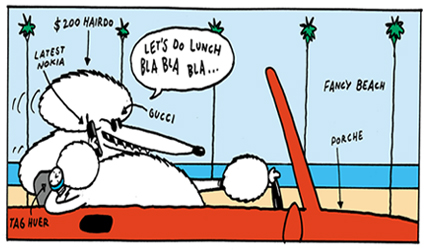
The Poodle: They are the flash and the class.


The Chihuahua: The technical wizard.


The Basset: The old loyal companion.


The Big Dog: He talks the big talk, walks the big walk and does big deals.


The Super Dog: The one who as learnt to adopt the traits of other dogs for the task at hand.


Be sure to find out which dog you are and which you need to be.

Wednesday, May 22, 2013

What Are You Reading? $uccess $tories

Are you actively investing in real estate? If you are finding yourself still having trouble taking that first step. Or if you have taken that first step and you are looking for inspiration to keep the momentum. $uccess $tories is a good book for you.

This book is about real life people having successfully taken the first step towards their financial independence. People of all age group and all background.

A couple from Hawaii both with university degrees, where taking the slow and steady approach for their retirement investments. Something low risk, in mutual funds. But they still suffered from $20,000 loss due to the market crash.

From playing Cashflow 101 with friends, they realised their degrees wouldn't help them much in retirement or their slow and steady approach towards investing. So, following Rich Dad's advised they purchased two rental properties from foreclosure making money in the buy.

What I really like about this book is that they provide the calculations of each deals.

If you haven't yet; be sure to read $uccess $tories.


Wednesday, May 15, 2013

What Are You Reading: Rich Dad's Prophecy

How would you have liked to know ahead of time that the crash in the stock market would have occurred so you wouldn't have lost half of your retirement money? Or better yet, how did the U.S. government or the major bank see it coming and do something to avoid it.

Because there was no way of knowing, there was no sign.

Ya I don't buy that! In fact Robert Kiyosaki wrote a book in 2002 titled Rich Dad's Prophecy: Why the Biggest Stock Market Crash In History Is STILL Coming... and How You Can Prepare Yourself and Profit from It. In this book, Robert describes the events that are taking place that were about to create the perfect storm in the economic world. So if he was able to see it coming, why wasn't the government? And is today's situation really any better?

Wednesday, May 08, 2013

What Are You Reading: Who Took My Money?

Who Took My Money? Why Slow Investors Lose and Fast Money Wins!
by Robert Kiyosaki


If you have, lets say, $10,000 to invest. Where should you invest it? Simple question, unfortunately the answer is not as easy. For one, you would have to take in consideration your comfort level and time commitment. The problem is, you may not like the answer. If you are currently investing in mutual funds. It as been my experience most people would like to get a specific fund for that answer. Not, get out of mutual funds. Did you know that most financial advisers are first and foremost sales people. They are selling a product, mutual funds. They will never advise for you to invest in anything else but mutual funds, because that is where they make their money.

I remember when we met with a representative of Primerica. His advise was to combine all of our debts into one mortgage against our house. Then amortise for 35 years and make payments as if it was amortised for 25 years. It would leave us with a massive payment that would take up all of our spare money, but we would be debt free in 15-20 years. "Doesn't that sound great?" he asked. He was a little shocked when I didn't agree. That would only work if we where done accumulating debt. But I had two small children, we where already outgrowing our house and our vehicles where on the verge of needing to be replaced.

I lost further trust in the company when the representative kept asking me to join the Primerica group and become a financial adviser. I explained that I knew nothing about that, but he assured me not to worry that it would only take a weekend course and an easy test. Really?!?? That's all it took him to advise me what I should be doing with my money to get ahead? No kidding I didn't like the answers I was getting.

If you are wondering if your financial adviser is a sales person, ask this; when do they get paid? When they sale you a mutual fund product or when they make you money?

I also find very funny that they suggest you be diversified when all they offer is a product that only makes money one way, when the market goes up. That is not being diversified. Wouldn't it make more sense that if you are to be in the market, that you diversify yourself so that you can make money when it moves up or down? And that to further diversify yourself by investing out of the market as well?

That was my personal opinion. If you want to hear more about why and where you should invest your money, read Who Took My Money?

Wednesday, May 01, 2013

What Are You Reading: Who Moved My Cheese

When cooking a roast my mother would trim off both sides of the roast before putting it in the roaster. One day, I asked her why she did that. She said, "that is the way my mother as always done it." So, I called my grandmother and asked her why she trimmed both ends of her roast before cooking it. She also answered, "because that is how my mother has always done it." So, I called my great-grandmother and ask her, why do you trim both ends of the roast before cooking it. She said, "because it didn't fit in the roaster"
 
We are creatures of habits. We will do something again and again because that is the way we have always done it. We rarely stop to evaluate whether it is supported with good reasons, we simply go about our business the same we always have.

Who Moved My Cheese? by Spencer Johhson. In this story, there are two mice and two "littlepeople" that live in a maze. Everyday they get up and go to a section of the maze where there is cheese. One day, when they get there, the cheese is not, it's gone. The mice, possessing simple brains and good instinct, do not over analyse the situation and takes off looking for new cheese. The littlepeople have complex brains and emotions, one gets angry and shout about the unfairness of it all, the other was quiet and in denial. The next day, they go again, hoping the cheese will miraculously be back, but it's not. They analyse the situation, discuss what happened to the cheese, but ultimately they do nothing.

This book is an amazing little book about dealing with change in your work and in your life. It is less then a hundred pages, so perfect for a quick read; no excuses.


It reminds me of the stock market. How many of us, invest in mutual funds? How many of us saw the whole of our investment dwindle to crumbs in the crash of 2008? Some of us weren't able to retire as planned. Now how many of us, knowing the risk in the stock market, are still contributing to those mutual funds every month or year, hoping it will there when we need it? Aren't we like the littlepeople going back to the same spot looking for the cheese that is gone?

If you haven't already, read this book.